
UAMS News Block
Add the UAMS News block to dynamically display the latest posts from one or more categories.
Format
Set the Format dropdown to select how the posts should be displayed in the block.
Available options:
- Headlines — Display a bulleted list of linked post titles.
- Excerpts — Display a vertical list of posts with featured images on the left, text content and link on the right.
- Cards — Display tiles for four posts with a vertical arrangement of their featured image, text content and link. The arrangement of these tiles will shift as the width of the viewport changes.
- Full — Display the entirety of first post in the defined category, including featured image and its caption.
- Grid — Display one post on the left with a featured image while displaying two posts on the right with smaller post titles. The arrangement of these posts will shift as the width of the viewport changes.
- Side-by-Side Image & Text — Display one post with its featured image on the left half of the block and its text content and link on the right half of the block. On larger viewport widths, the middle 42-69% of the image width will be visible (presuming the image is at a 16:9 aspect ratio). On smaller viewport widths, the layout will shift to having the featured image above the other content, and the image will display at a 16:9 aspect ratio.
Examples of these formats can be seen at the bottom of this article. The order of the examples reflects to the order of the list above.
Section Title
Enter a value in the Section Title field to define the heading that will be placed above the posts in this block. Note that not all Format options will display the section title on the page.
Capitalize the text in the heading according to the AP Style rules for composition titles.
Hide Section Title
Toggle the Hide Section Title input on if you want to hide the block’s heading on the page.
While you have the option to hide the block’s heading, it is rarely (if ever) recommended. Leaving it visible gives the user/reader a jumping-in point on your page. If you think you have a good reason to hide the heading, reach out to the web team before doing so.
Every instance of this block must have a heading, even if it is visually hidden. The heading is still used for accessibility and SEO purposes. This heading indicates what the following items have in common.
Category
Add a category slug or a string of category slugs to the Category input to find posts that are in any of the categories.
To find the slug for a category, go to the site’s dashboard, then Posts, then Categories. There should be a table with a list of categories. In that table is a column labeled Slug. Copy the slug value for the desired category and add that to the block’s Category input.
To add more than one category slug to the input, separate the slugs with a comma and a space (e.g., food, clothing).
Adding more than one category slug will expand the list rather than narrow it. If you defined Category value as food, clothing, the posts displayed would be from either the category with a slug of food or the category with a slug of clothing.
Count
Define how many posts should be displayed by adding a whole number to the Category input.
Note that some Format options have a predefined number of posts that will be displayed.
Offset
To configure the block to not display a certain number of the most recent posts, enter the value as a whole number in the Offset input.
This may be useful when combining two UAMS News blocks on a page, using the first block to display the one most recent post using the Side-by-Side Image & Text option in the Format input, then using a second block to display the posts older than that one by adding an Offset value of 1 and setting the Format value as Cards.
Background Color
See Backgrounds of UAMS Blocks for information on selecting a background color.
Hide Images
Some Format options will display the featured image for each post. If there is no featured image, a UAMS logo will be used as a replacement. Toggle on the Hide Images setting to suppress all images for this block.
Note that not all Format options will have the option to hide images.
Hide Author
Some Format options will display the author for each post. Toggle on the Hide Author setting to suppress the display of authors for this block.
Note that not all Format options will have the option to hide authors.
Hide Date
Some Format options will display the publish date for each post. Toggle on the Hide Date setting to suppress the display of publish dates for this block.
Note that not all Format options will have the option to hide publish dates.
Advanced Settings
Expand the Advanced accordion panel (near the bottom of the block) to reveal addition settings.
Including Local Posts
By default, the block only looks for posts on news.uams.edu. To also include posts from the site where the block is used, toggle on the Include Local option.
There is not currently an option only include local posts. The best option for that is to create categories on the site whose slugs do not match the slugs of categories on news.uams.edu.
Advanced Category
Add single category ID or a string of category IDs to the Advanced Category input to find posts that are in any of the categories.
To find the ID for a category, go to the site’s dashboard, then Posts, then Categories. There should be a table with a list of categories. Click the name of the desired category. The URL of this page should contain a URL parameter named tag_ID (e.g., .../wp-admin/term.php?taxonomy=category&tag_ID=123&post_type=post...). Copy the number value after tag_ID= but before & (e.g., 123 in the example above).
To add more than one category ID to the input, separate the IDs with a comma and a space (e.g., 123, 456).
Adding more than one category ID will expand the list rather than narrow it. If you defined Category value as 123, 456, the posts displayed would be from either the category with an ID of 123 or the category with an ID of 456.
To find posts that are in one category but not another (e.g., display posts that are in the Food category and are not also in the Red Things category), add a minus sign before the category ID that should be excluded (e.g., 123, -456)
Example UAMS News Block, Excerpts

Maddy Mahon
Meet Maddy Mahon, Pharm.D., the MVP for October and a pharmacy specialist in UAMS Acute Care Clinical Pharmacy Services.

Jordan Gall
Meet Jordan, the university’s MVP for September, and a patient experience specialist – education in the UAMS Office of Patient Experience.

Tyreka Bradley
Meet Tyreka Bradley, medical laboratory scientist with the UAMS Northeast Regional Campus in Jonesboro and the university’s MVP for August. Tyreka has a passion for patients, and it shows in her work collecting and managing laboratory samples from patients. Her positive, can-do attitude improves patient interactions and brings an uplifting presence for her coworkers. One of…
Example UAMS News Block, Cards

Maddy Mahon
Meet Maddy Mahon, Pharm.D., the MVP for October and a pharmacy specialist in UAMS Acute Care Clinical Pharmacy Services.
Read more
Jordan Gall
Meet Jordan, the university’s MVP for September, and a patient experience specialist – education in the UAMS Office of Patient Experience.
Read more
Tyreka Bradley
Meet Tyreka Bradley, medical laboratory scientist with the UAMS Northeast Regional Campus in Jonesboro and the university’s MVP for August. Tyreka has a passion for patients, and it shows in her work collecting and managing laboratory samples from patients. Her positive, can-do attitude improves patient interactions and brings an uplifting presence for her coworkers. One of…
Read more
Alexis Spurgeon
Meet Alexis Spurgeon, the MVP for July and a supply coordinator in UAMS Supply Chain. In the course of her work, she puts into practice the UAMS culture of being polite, friendly, respectful, thoughtful, optimistic and compassionate.
Read moreWant to read more stories like these?
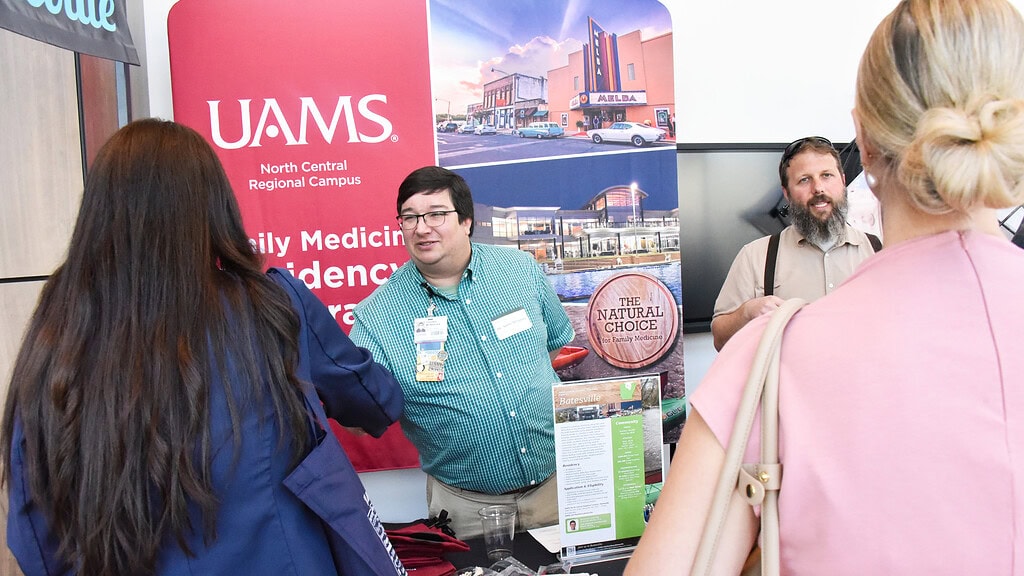
UAMS North Central Regional Campus faculty talk with medical students at fair.
Medical Students Explore Residency Programs, Practice Skills at Residency Fair
| Medical students explored their options for residency training at a recent Arkansas Primary Care Residency Fair at the North Little Rock Event Center, presented by the University of Arkansas for Medical Sciences (UAMS).
The fair gave students a chance to meet representatives from 24 Arkansas residency programs in family medicine, emergency medicine, internal medicine, pediatrics, and preventive medicine.
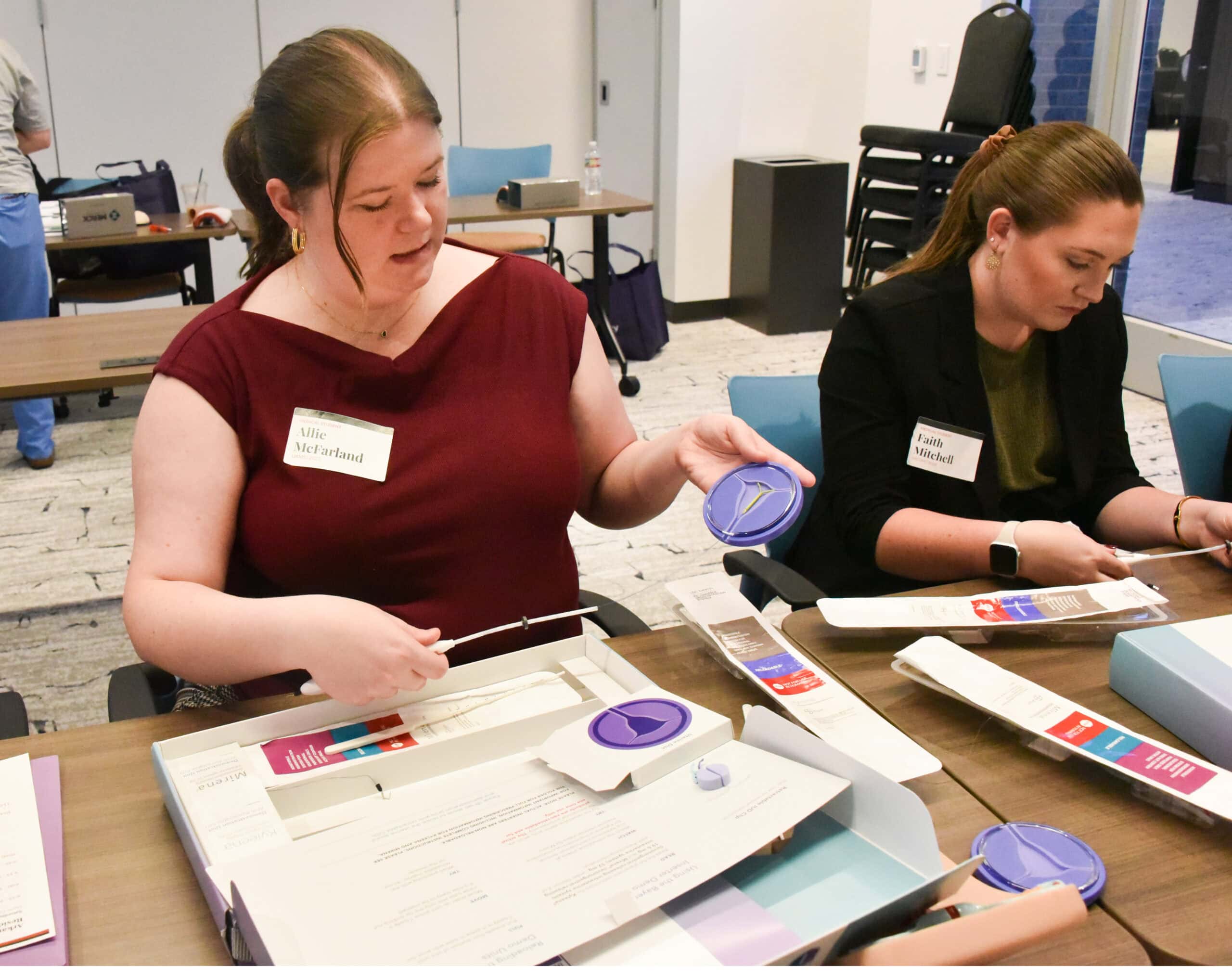
Allie McFarland, fourth-year medical student, practices IUD insertion.Andrea Hooten
Allie McFarland, a fourth-year medical student from Bryant, attended the fair to find programs that reflect what she wants from a residency. She said she would like to stay in Arkansas, where she’s established roots with her husband and newborn.
“I’ve been asking a little bit about how residents are able to juggle family life and about flexibility,” said McFarland. “I don’t want to go to a program that, if the baby gets sick, one or two of my fellow residents are always the ones who are getting bombarded with my coverage. So, I’m asking about flexibility for my sake, and how it impacts the rest of my team.”
McFarland joined medical students from UAMS, the Arkansas College of Osteopathic Medicine in Fort Smith, Arkansas State University’s New York Institute of Technology College of Osteopathic Medicine (NYITCOM), and the new Alice L. Walton School of Medicine in Bentonville as well as three out-of-state colleges.
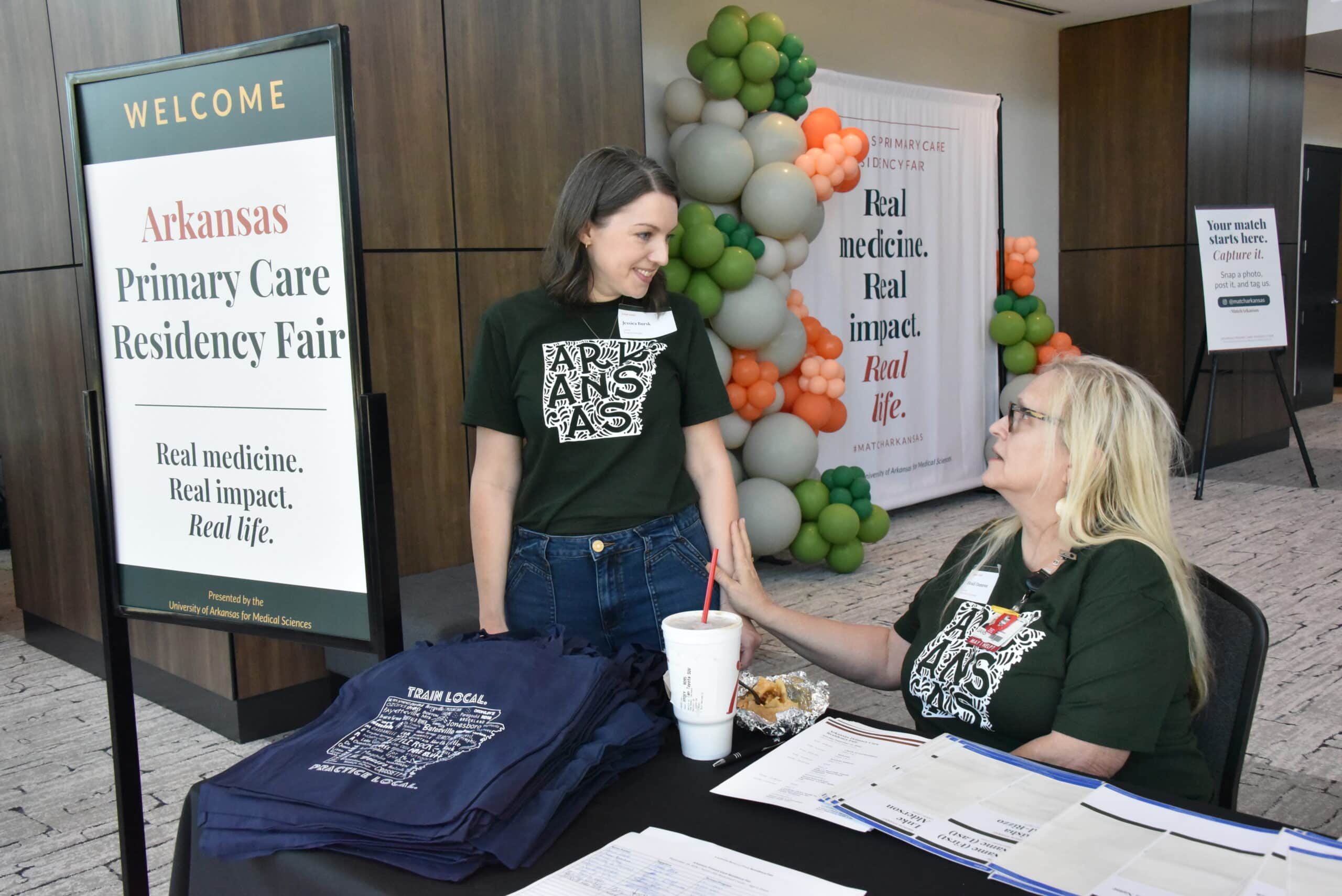
Jessica Bursk, event planner, talks with Heidi Damron at sign-in desk.Andrea Hooten
Jessica Bursk, event coordinator and program education manager at the UAMS Department of Family and Preventive Medicine, planned the fair for mid-September when many students are working on their residency applications and gathering letters of recommendation. Starting in the fall, residency programs invite seniors for an interview, and in the winter, both the programs and students rank their top choices in the National Resident Matching Program, which matches the student to the highest possible residency choice. On Match Day — March 19, 2027 — students will find out what residency they will attend.
Bursk has a grasp of what students want to know about residency programs. With 10 years as program education manager for the UAMS Department of Family and Preventive Medicine, she arranges rotations for medical students at the eight UAMS Regional Campuses and fosters relationships with students interested in family medicine. Bursk said in-person fairs allow students to meet people within the residencies and ask questions.
“They’re trying to find their fit, find their people, and training. Training requirements are pretty standard across programs, so you really need to find commonalities and make sure you mesh. There’s so much that you don’t get through a website or through an online interview. With primary care, it’s all about relationships and connections, so I think you just have to do that face-to-face and really understand the program,” said Bursk.
Sheena CarlLee, M.D., program director of the UAMS/Washington Regional Internal Medicine Residency, said one of the more important questions that students should pose to residencies is what kind of clinical experience they can expect, such as pathologies they’ll be seeing or the balance of inpatient versus outpatient training. She added another question they should ask: Is the program going to prepare you beyond residency?
“Those first couple of years of practice are so tough and scary,” said CarlLee. “And so, you want to be at a place where you’re going to get the experience that you need and the tools you need to think through the complex patients that you might not have expected to see.”
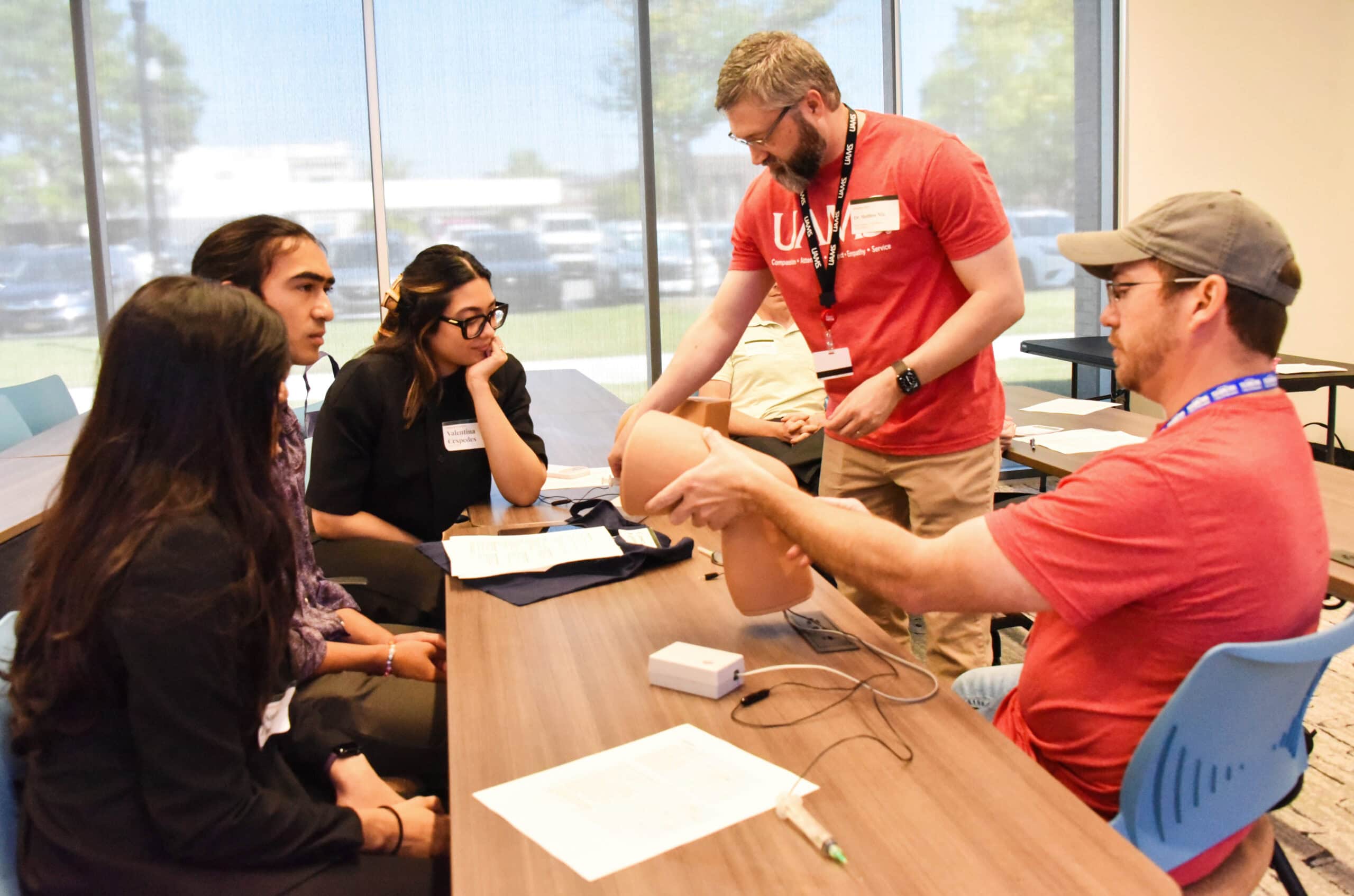
Matthew Nix, M.D., and Brent Blackburn, M.D., third-year resident from UAMS Southwest Regional Campus, show students how to inject a knee.Andrea Hooten
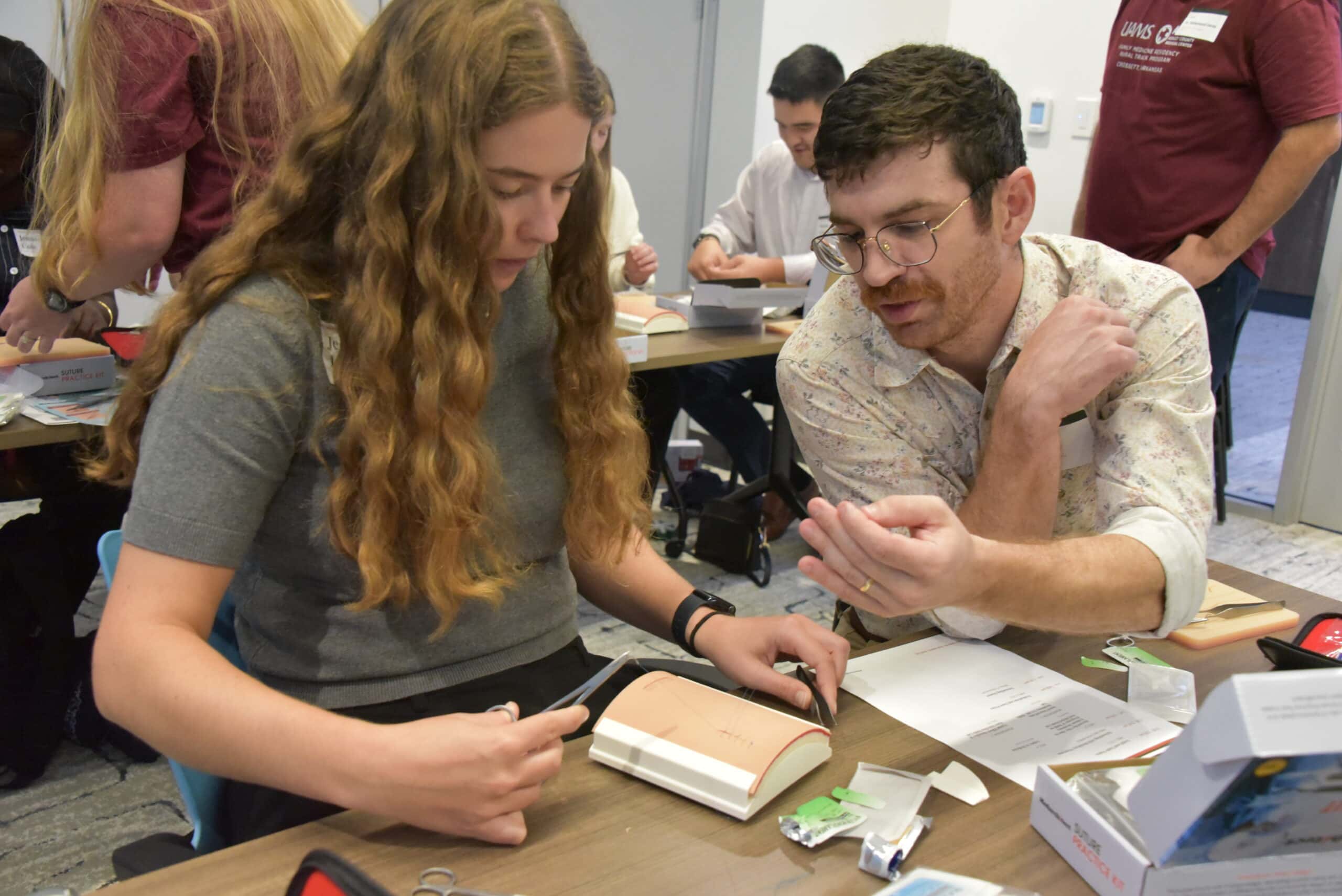
Ben Jackson, M.D., first-year resident at UAMS North Central Regional Campus, helps a medical student suture.Andrea Hooten
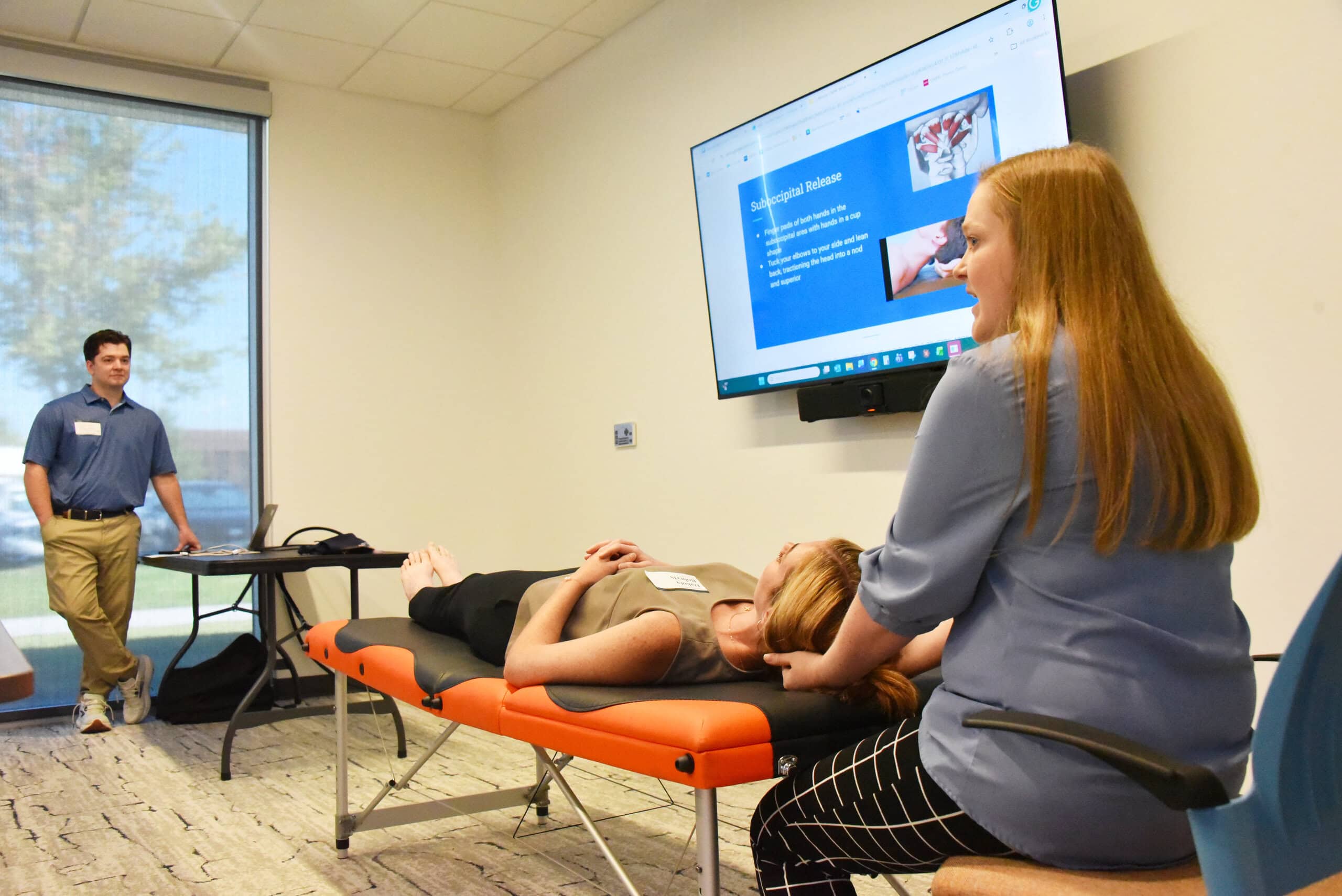
Kelsey Vinson, D.O., from UAMS Northeast Regional Campus, illustrates osteopathic manipulative medicine with a student.Andrea Hooten
This year, Bursk expanded the fair by adding skills labs on inserting long-acting reversible contraception (LARC), suturing, injecting knees and shoulders, and osteopathic manipulation medicine where physicians use hands-on techniques to relieve pain and help with systemic issues.
She included panel discussions on Regional Campuses’ rural track programs which immerse residents in rural medicine, and insider tips on how a student can improve the application and interview process. The day also included talks on lifestyle medicine by Lauren Gibson-Oliver, M.D., with the UAMS Department of Family and Preventive Medicine, and the “unwritten rules of residency” by Patrick Sullins, M.D., with the UAMS North Central Regional Campus in Batesville.
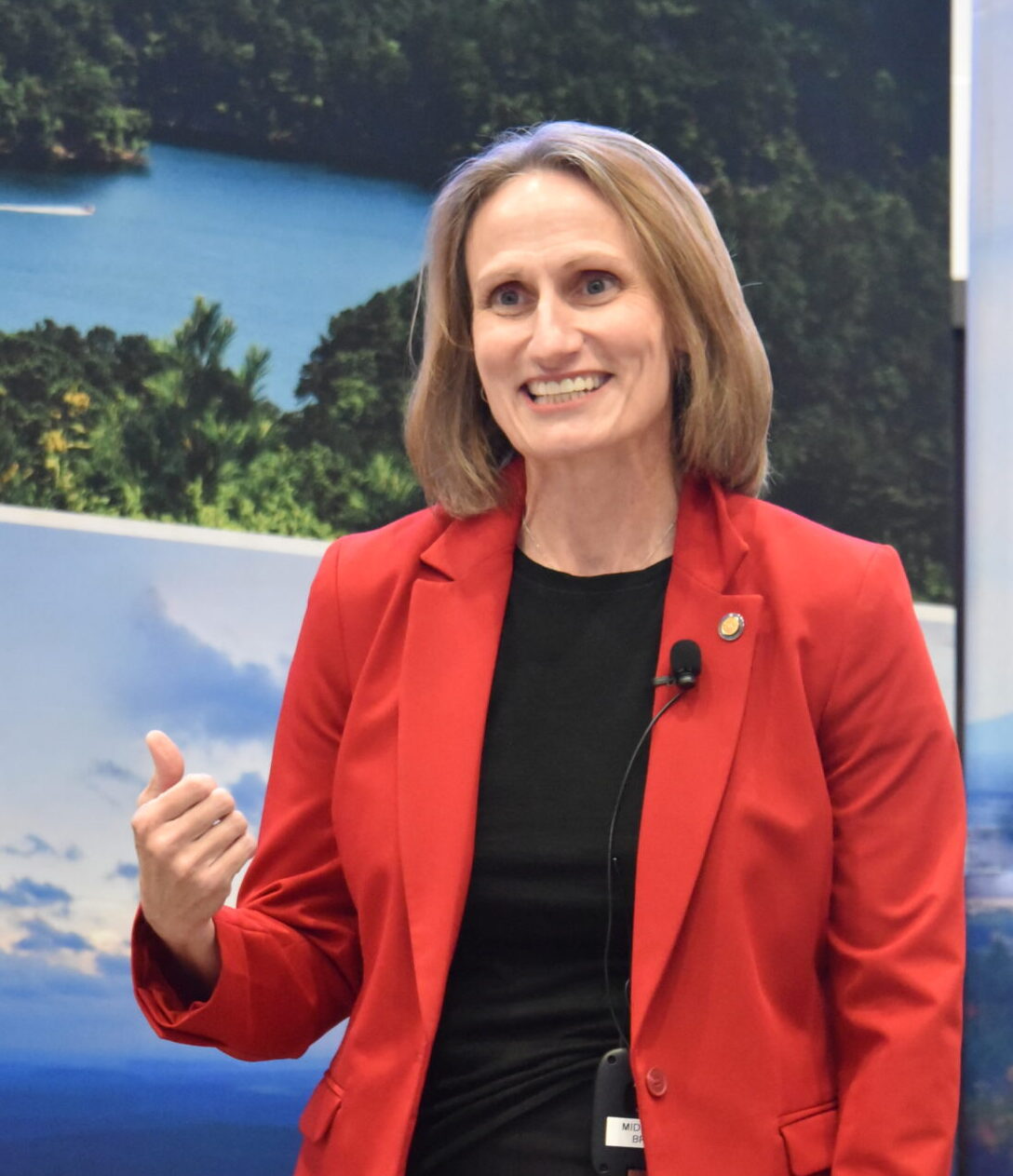
Amanda Deel, D.O., with NYITCOM, kicked off the event as the keynote speaker.Andrea Hooten
Keynote speaker Amanda Deel, D.O., associate dean of graduate medical education at NYITCOM, encouraged students to continue their residency in Arkansas and use their influence as physicians to mold healthcare policy. Deel recently stepped in as president of the Arkansas Academy of Family Physicians, where she will advocate for the profession.
“Arkansas needs you, our population needs you, our state legislature needs you,” said Deel. “So, if you got into medicine thinking, ‘I want to make a really big impact,’ you can make that impact here in Arkansas. If you’re training in Arkansas and have a heart for helping populations in need, populations that maybe feel unseen, you are needed here.”
The Primary Care Residency Fair is supported by the Health Resources and Services Administration (HRSA) of the U.S. Department of Health and Human Services (HHS) as part of the Medical Student Education grant. The contents are those of the author(s) and do not necessarily represent the official views or endorsement of HRSA, HHS or the U.S. government.
#gallery-1 { margin: auto; } #gallery-1 .gallery-item { float: left; margin-top: 10px; text-align: center; width: 33%; } #gallery-1 img { border: 2px solid #cfcfcf; } #gallery-1 .gallery-caption { margin-left: 0; } /* see gallery_shortcode() in wp-includes/media.php */-

- Sawyer Sparks, D.O., with UAMS Northeast Regional Campus talks wtih Gracen Hambrick and Emma Rouse, fourth-year medical students at UAMS.
-

- Summer Jamison, residency coordinator with UAMS South Central Regional Campus, set up a Zoom of past residency graduates who could talk with medical students.
-
- Olivia Ostermann, D.O., with UAMS Northeast Regional Campus, shows a medical student where to insert a long-acting reversible contraception device.
-

- Student talks to Unity Health residency representatives.
-
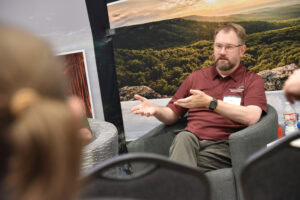
- Brad Walsh, M.D., program director at UAMS’ rural track residency program in Crossett, speaks to students about rural medicine.
-
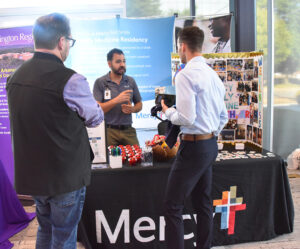
- Students talk to representatives from Mercy residency.
-
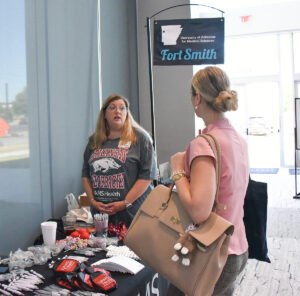
- UAMS West Regional Campus residency coordinator, Lynn Glover, talks with Mattie Neighbors, a medical student.
-
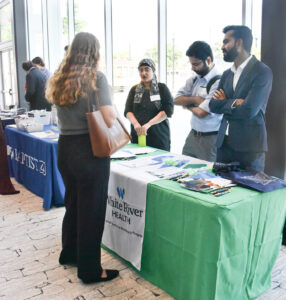
- Students talk with White River Health residency representatives.
-
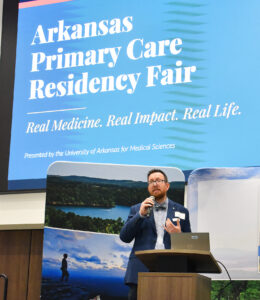
- David Kelley, M.D., introduced Amanda Deel, D.O., as the keynote speaker.
-

- Lauren Gibson-Oliver, M.D., talks about lifestyle medicine in one of the breakout sessions.
Example UAMS News Block, Grid
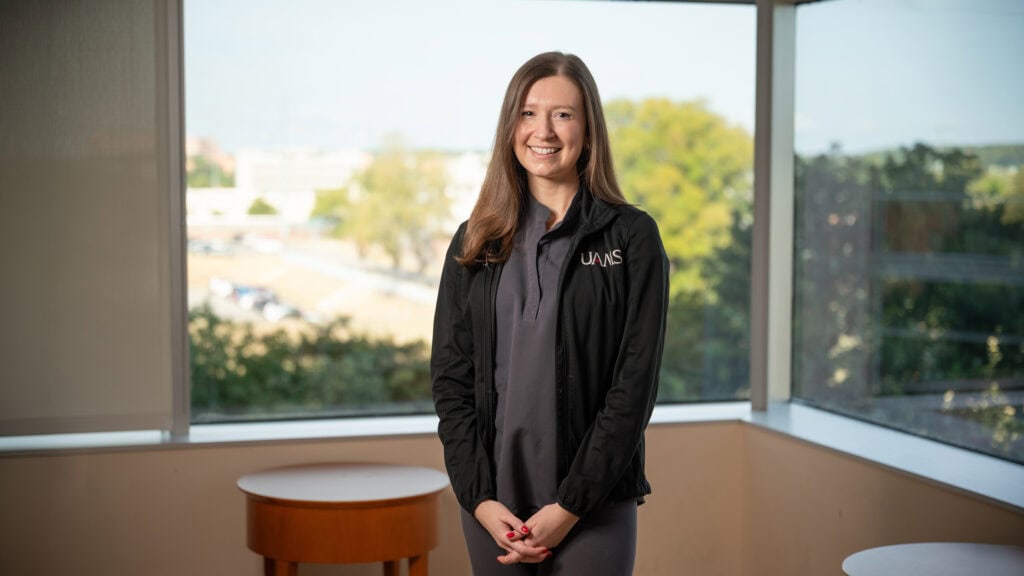
Maddy Mahon
Meet Maddy Mahon, Pharm.D., the MVP for October and a pharmacy specialist in UAMS Acute Care Clinical Pharmacy Services.
Read moreJordan Gall
Meet Jordan, the university’s MVP for September, and a patient experience specialist – education in the UAMS Office of Patient Experience.
Read moreTyreka Bradley
Meet Tyreka Bradley, medical laboratory scientist with the UAMS Northeast Regional Campus in Jonesboro and the university’s MVP for August. Tyreka has a passion for patients, and it shows in her work collecting and managing laboratory samples from patients. Her positive, can-do attitude improves patient interactions and brings an uplifting presence for her coworkers. One of…
Read moreWant to read more stories like these?